


Search Engine Advertising (SEA) helps you when you need immediate visibility. It makes your brand instantly visible to people who are actively looking for your product or service. But visibility alone isn’t enough.
Strong campaigns connect that moment of intent to a clear message, a compelling offer, and a broader story. They give direction to your ads and make sure every click fits into something bigger than a single search result.
We’ll help you turn your ad spend into an investment. With smart data and sharp copy, we make sure every click counts and your message lands exactly where it needs to. You focus on the growth, we’ll do the rest.
Organic reach is great, but it’s a crowded space and it takes time. Campaigns give you a direct connection to your audience and immediate visibility in your market.
A strong campaign only works if you understand where your audience searches, how competitors show up, and where opportunities lie. And because ads aren't isolated, landing pages matter too. When message and page don’t align, traffic won’t convert.
SEA and campaigns only work when they are monitored and optimised in real time. By steering budgets towards what performs, pausing underperforming keywords, and refining ads, every click contributes to measurable impact. The right approach puts your brand in front of buyers and gives you the edge you need.
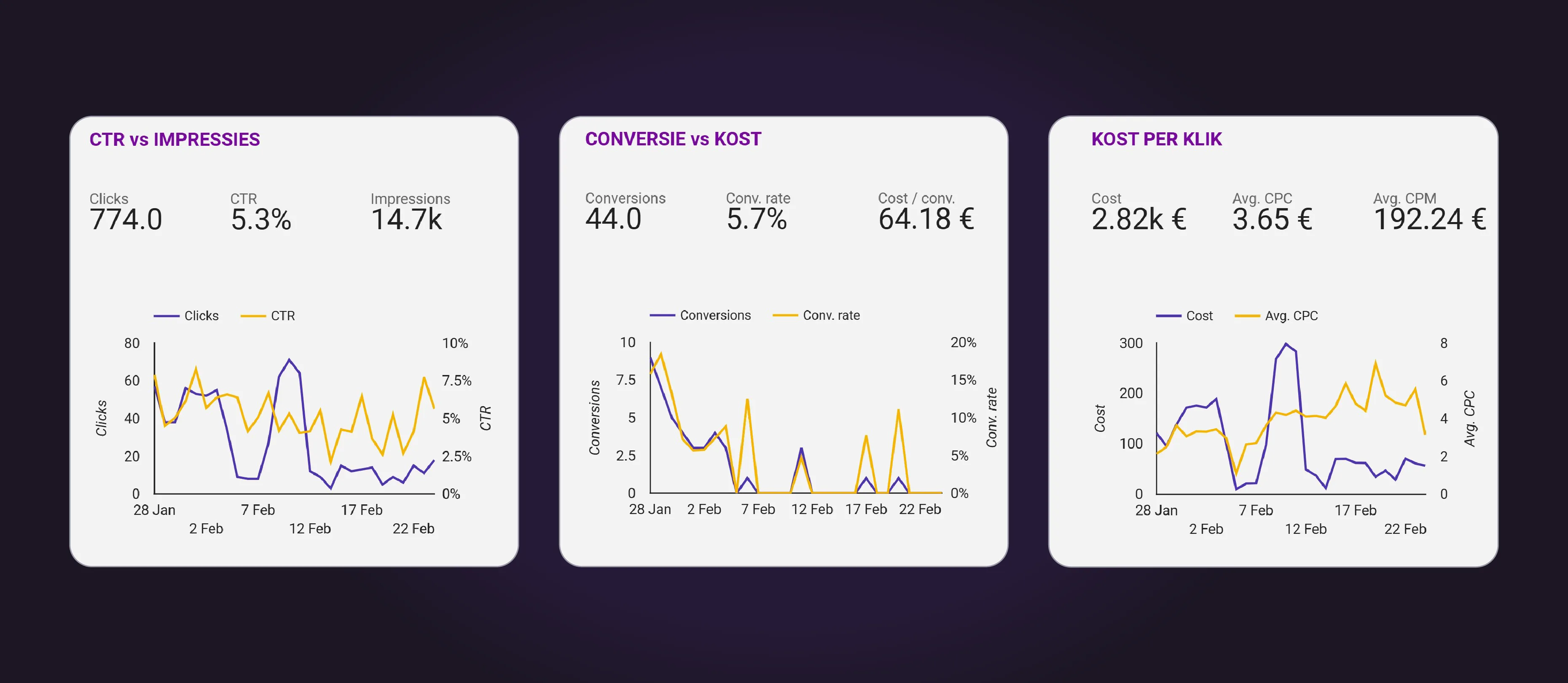
Codana was spending a large ad budget but flying blind on the returns. We split their services, optimised their copy, and turned raw numbers into a steady stream of insights.
Read the case
Scalability is key in digital products. Unmute You delivered exactly that for our SEA campaigns: a tightly managed and continuously optimised strategy with a truly measurable impact.

If you want to pay for clicks, grab your credit card. If you want to pay for actual customers, you need a plan. Too many businesses waste money because they treat ads like a slot machine.
We do things different. We look for the exact moment of intent and use data to find where you can win. It takes a little patience, and a lot of smart targeting.
The goal is to spend only where it pays off. This makes your ads the perfect partner for your long-term organic growth.
Want to know more?



The main difference between SEA and organic marketing is that advertising gives you immediate visibility, while organic methods build long-term traffic.
Search Engine Advertising (SEA) involves paying platforms like Google to appear at the top of the search results instantly. It is fast and highly targeted, but your traffic stops the moment you pause your budget. Organic marketing takes much longer to gain traction. However, once you rank high organically, you attract steady visitors without paying for every single click. For the best results, you need a smart mix of both: SEA for speed, and SEO for longevity.
A starting advertising budget for B2B SEA depends heavily on your specific industry and competition, but a common testing baseline is €100 per week.
You do not need thousands of euros to launch effective campaigns. Starting with a smaller test budget allows you to gather data and see which keywords actually perform. During the initial learning period, Google algorithms figure out how to best display your ads. Once you identify what converts visitors into leads, you can safely scale up your spending.
You measure the success of SEA campaigns by tracking concrete conversions rather than just looking at pure clicks.
Getting people to click your ads is relatively easy, but getting them to take action is the actual goal. By analysing data in Google Ads and Analytics, you can see exactly what happens after the click. Did they fill out a form? Download a whitepaper? Call you? If a campaign is not delivering a positive return on investment, you can simply pause it and redirect those funds.